Pixar’s dominance of the CG cinematic landscape is a truth universally acknowledged, and while Sony and Dreamworks are catching up there is a wit and depth to the likes of Toy Story, Finding Nemo and their studio stablemates which appears timeless and unbeatable.
And so as our favourite cinema in the world, London’s Prince Charles, is doing the decent thing and running a thorough retrospective of the brightest lights to come out of Emeryville we are looking back over the Pixar catalogue with articles and competitions.
To kick off our series of articles celebrating all things Pixar Karen Yossman delves deep into the toybox and dusts off the old favourites from perhaps the greatest cinematic trilogy of all time.
You can find out when your favourite is playing at the Prince Charles website here, and check back each week for more Pixarian goodness.
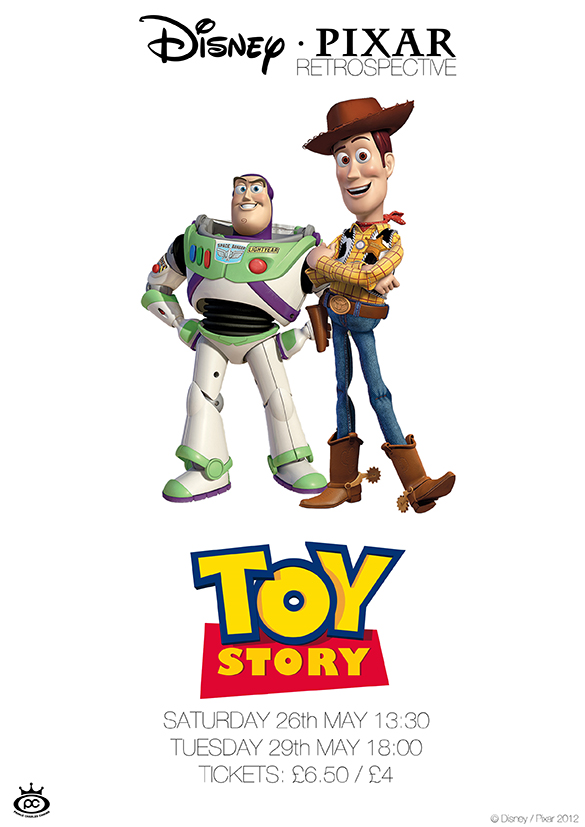
Woody
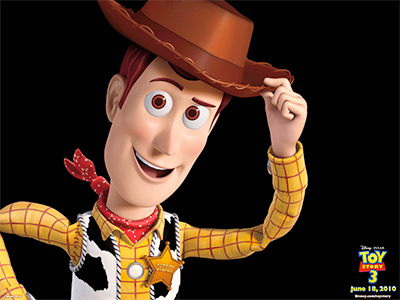 Quick Facts
Owned by: Disney Pixar
Launched: 1995
Toy Story Debut: Toy Story
Woody started life as a wooden ventriloquist’s dummy but, after watching an animated test, the idea was nixed by Disney execs who felt his separated jaw looked too creepy. Given that they were aiming for a buddy movie rather than a Chucky one, Pixar agreed to go back to the drawing board.
Inspiration finally came from John Lasseter, director of Toy Story and Chief Creative Officer at Pixar, and his childhood pull-string Casper the Friendly Ghost doll, which eventually morphed into the Woody we know and love today.
FYI: despite only ever being referred to by his first name á la Madonna and Cher, Woody actually does have a surname – according to Toy Story 3 director Lee Unkrich it’s ‘Pride’. To be fair, I kinda get why he just sticks to ‘Woody’.
Buzz
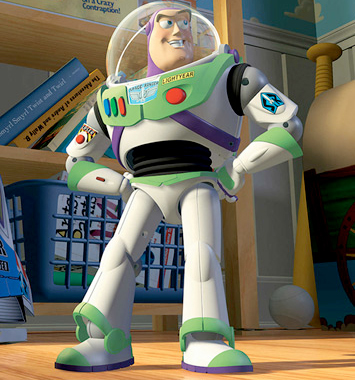 Quick Facts
Owned by Disney Pixar
Launched: 1995
Toy Story Debut: Toy Story
Buzz Lightyear was designed to be “the coolest toy ever made” and whilst he may have started off as a fictional action figure he created a very real panic during the Christmas following the film’s release when he became the most-coveted toy on Santa’s list and shops ran out of stock. (For those who remember asking for a Buzz and didn’t get one, I apologise in advance if this stirs up any painful memories.)
The shortage was less a cynical marketing ploy than the fact that the toy manufacturers had simply assumed Woody would be the best seller and so were under-prepared for the demand for Buzz. In retrospect the hysteria over the 12 inch space ranger is completely understandable: after all, this is a toy that not only inspired an Arnold Schwarzenegger film (albeit the Arnold Schwarzenegger Jingle All the Way, where Arnie plays a father desperately trying to get his hands on a popular action figure on Christmas Eve) but he has also actually been to space.
In May 2008 Buzz finally achieved his dream and made it to infinity and beyond aboard Nasa space shuttle Discovery, where he orbited the earth for 15 months. Oh, and in 2010 he topped the Christmas best-seller list. Again.
Mr Potato Head
 Quick Facts
Owned by: Hasbro
Launched: 1952
Toy Story Debut: Toy Story
What started out as a handful of sensory organs and a pipe that was meant to be attached to a real root vegetable has become one of the most successful toys ever made. Despite courting controversy over the years – Mr Potato Head was criticized for encouraging food waste in a time of post-war austerity and in 1987 the anti-smoking lobby put paid to the pipe – John Lasseter had no qualms about including one of his favourite childhood toys in Toy Story.
Whilst the film was not actually Mr Potato Head’s acting debut (he made occasional guest appearances in 1980s TV show Potato Head Kids) Toy Story was his first film role and led to his own short-lived television series, The Mr Potato Head Show. Despite his popularity, Mr Potato Head continues to attract bad press: only last month the BBC ran an article accusing him of inventing ‘pester power’ because he was the first toy to be marketed directly at kids rather than their parents.
Slinky Dog
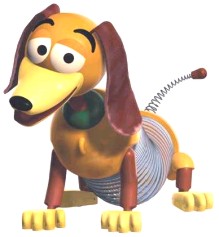 Quick Facts
Owned By: James Industries
Launched: 1945
Toy Story Debut: Toy Story
The Slinky was the staple of every kid’s childhood: a pointless yet innocuous toy that entertained children and possibly even introduced them to the concept of physics. Oh, and it was also a veritable death-trap for any unsuspecting adult who used the stairs in a Slinky-owning household.
Invented in the early 1940s by naval engineer Richard James, the Slinky began life as 2 ½ inches of coiled steel. By the 1950s there was a Slinky Train and a Slinky Worm but, forty years later, it was the Slinky Dog that caught the eye of Pixar’s writing team when they were developing Toy Story.
By this time Slinky Dog had been discontinued, James Industries had been re-located and Richard James had joined a religious cult. But it only took one telephone call from Pixar and a slight re-design to get Slinky Dog back into production and flying off the shelves in time for Christmas.