
Free time once depended heavily on schedules, physical locations, and whatever entertainment people could access at home. Television programs started at fixed hours. A trip to the cinema required planning. Games often meant sitting in the same room with other players. Digital technology has changed those habits. People now move between films, series, games, podcasts, social platforms, and other forms of online entertainment throughout the day.
This change goes beyond having more content available. Digital services have altered when people relax, how long they spend on an activity, and how they switch from one format to another. Someone might watch half an episode during lunch, play a game for fifteen minutes in the evening, or visit a gaming platform such as thorfortune while relaxing at home. Entertainment no longer needs to occupy an entire evening. It can fill small gaps in a person’s schedule.
Free Time Has Become More Fragmented
One of the clearest changes concerns the structure of leisure itself. Many digital activities work well in short sessions. A person does not need two hours to watch a full film or spend an evening playing a long game. Short videos, mobile games, podcasts, streaming episodes, and digital reading all allow people to choose how much time they want to spend.
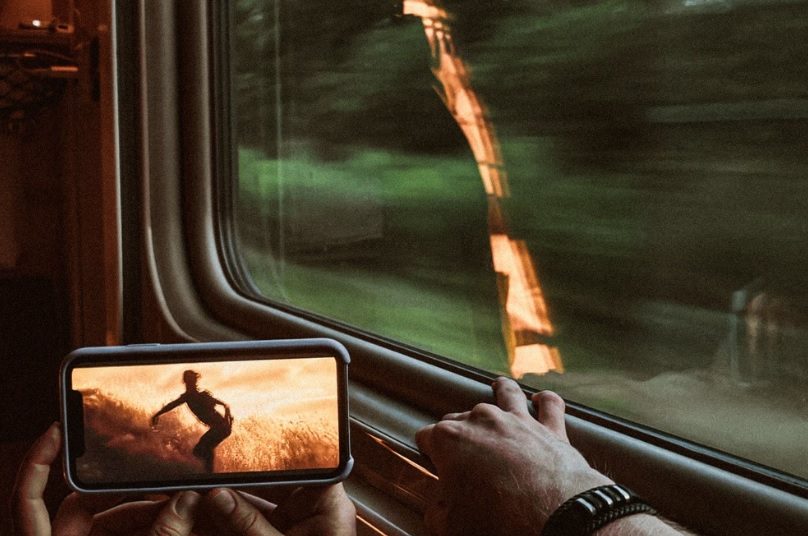
Smartphones play a major role in this pattern. They place several entertainment formats on one device that people already carry throughout the day. A ten-minute wait can become time for a video or an article. A train ride can include music, a podcast, or a game.
This pattern has also reduced the distinction between dedicated leisure time and brief periods of inactivity. Entertainment can now appear during breaks, commutes, waiting periods, and quiet moments at home.
That convenience creates a different challenge. When entertainment remains close at hand, people need to decide when to stop. Digital content can easily extend a short break if the next video, episode, or game starts quickly. As a result, time management has become part of modern leisure habits.
Screens Now Support Several Forms of Entertainment
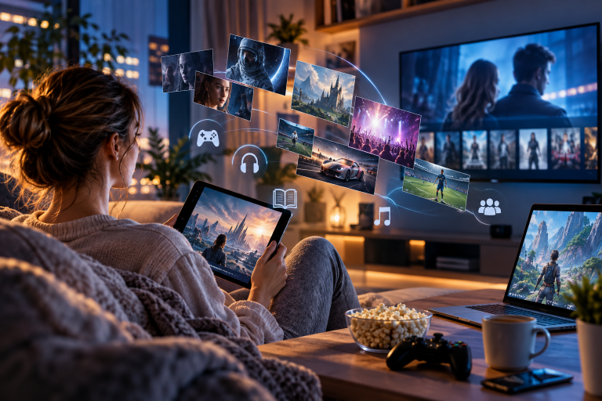
A television once had a fairly narrow purpose. A game console served another. Music required its own equipment. Today, a phone, tablet, computer, or smart television can handle several activities.
This convergence changes user habits. People can move from a film to a game without changing rooms or preparing another device. They can watch an interview, read about the production, listen to its soundtrack, and discuss it online using the same screen.
Common digital leisure activities now include:
- watching films, series, documentaries, and short videos;
- playing mobile, computer, browser, or console games;
- listening to music, audiobooks, and podcasts;
- reading digital books, magazines, news, and comics;
- taking part in online communities and group conversations;
- attending virtual events or watching live broadcasts.
These activities often overlap. Someone can play a game while speaking with friends through voice chat. Another person can watch a film and discuss it online at the same time. Digital tools have made entertainment more connected to communication.
Viewers Have More Control Over Their Schedules
Traditional broadcasting required audiences to follow a timetable. Digital viewing gives people much more control over when they watch something.
This change affects daily routines. A viewer can start a film late at night, stop after thirty minutes, and continue the next day. Someone with a short lunch break can watch part of an episode rather than wait until evening. People can also choose longer viewing sessions when they have more time.
Control over timing has changed expectations. Many users now expect entertainment to fit around their schedule instead of arranging their schedule around entertainment.
The same principle applies beyond video. Podcasts allow listeners to stop and continue later. Many games save progress frequently. Digital publications let readers return to an article from another device. Leisure has become easier to divide into smaller sessions without losing progress.
Film and Games Increasingly Share Creative Ideas
Cinema and interactive entertainment once occupied fairly separate areas of leisure. They now share many creative techniques.
Games use camera angles, dialogue, character development, music, lighting, and structured narratives that audiences associate with film. At the same time, filmmakers increasingly work with visual approaches that audiences know from digital media and games.
This connection matters because people do not always separate entertainment into strict categories. A viewer who enjoys a science-fiction film may look for a game with a similar setting. A player may become interested in a film after encountering familiar themes in an interactive format.
Digital culture encourages that movement. Search tools, recommendation systems, online discussions, and entertainment publications help audiences discover related material quickly. One activity can lead directly to another.
However, the experiences still demand different kinds of attention. Film usually asks viewers to follow a predetermined sequence. Games ask players to make decisions and perform actions. Those differences give people several ways to spend time with similar subjects.
Short-Form Content Has Changed Attention Habits
Not every change involves longer entertainment experiences. Short-form media has become a major part of daily screen use.
A video may last less than a minute. A mobile game session may take five minutes. A podcast segment can fill part of a commute. This format suits people who want entertainment without making a large time commitment.
Short content also changes how creators structure material. They often introduce the main subject quickly because viewers can leave with little effort. Long introductions make less sense when another piece of content sits one tap away.
That does not mean long-form entertainment has disappeared. Films, multi-hour games, books, and extended interviews still attract substantial audiences. Instead, people now mix short and long formats according to their available time and mood.
A person might watch short clips during the afternoon and choose a two-hour film at night. The formats serve different moments rather than replacing one another completely.
Entertainment Has Become More Social
Digital leisure often combines media consumption with communication. People discuss films while watching them, share reactions to games, exchange recommendations, and join communities built around specific interests.
Multiplayer games make social interaction part of the activity itself. Live broadcasts often include real-time discussion. Film audiences can continue talking about a production long after they leave the cinema or finish watching at home.
This social element also changes discovery. Friends and online communities can influence what someone watches or plays next. A recommendation no longer needs to come from a television advertisement or magazine review. It may arrive through a private message or group conversation.
At the same time, online discussion can demand additional attention. People may spend as much time reading reactions and commentary as they spend with the original work. Digital leisure therefore includes both the content itself and the conversations that surround it.
Personal Choice Shapes Modern Leisure
Digital libraries contain far more material than any person can reasonably consume. As a result, choosing what to watch, hear, read, or play has become an activity in its own right.
Search functions and recommendation systems help narrow the selection. Viewing history, saved lists, categories, and user preferences can reduce the amount of manual searching. Yet a large catalogue can also make decisions harder. People sometimes spend considerable time browsing without choosing anything.
This has encouraged users to create their own methods for managing entertainment. Some keep watchlists. Others follow specific genres, critics, communities, or subjects. Many alternate between familiar material and something they have not tried before.
The shift matters because audiences now exercise more control over selection. A traditional television schedule offered a limited set of choices at a particular hour. Digital services let users search large catalogues whenever they want.
Mobile Devices Have Moved Leisure Outside the Home
Entertainment no longer stays in the living room. Portable screens allow people to watch, read, listen, and play in many locations.
Public transport provides an obvious example. Commuters can use headphones and a phone to watch a program or listen to an audiobook. Travellers can download material before a flight. People can read digital publications while waiting for an appointment.
Mobile access also encourages developers and media producers to think about different conditions. A person who uses a phone on a train faces different circumstances from someone who watches a television at home. Small screens, touch controls, headphones, network quality, and battery life all affect the experience.
As a result, many digital formats support short sessions, simple controls, saved progress, and movement between devices. These features reflect the practical conditions in which people now consume entertainment.
Home Entertainment Has Expanded
The home remains a major setting for leisure, but digital technology has expanded what people can do there.
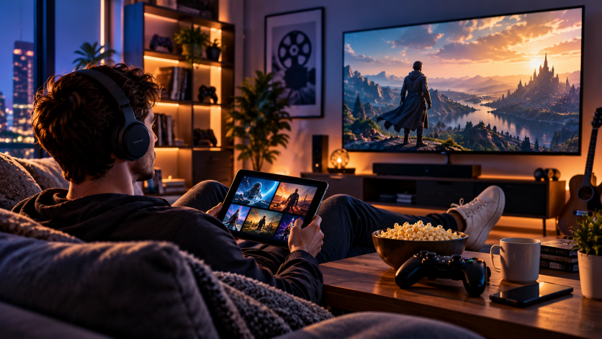
A household can watch films, access live events, play multiplayer games, listen to extensive audio libraries, and communicate with people in other locations. Many of these activities require little physical storage because users access content digitally.
This shift has changed the role of the living room as well. People do not always gather around one television and watch the same program. Different household members may use separate screens for different activities.
Shared viewing still matters, particularly for films, sports, and major television programs. Yet individual entertainment has become easier to arrange. Headphones, personal devices, separate profiles, and portable screens let several people pursue different interests in the same home.
Digital Leisure Requires More Conscious Time Management
Easy access to entertainment brings practical questions about time. When a device can supply content at any hour, users need to decide how much attention they want to give it.
Many digital activities lack a natural stopping point. A television schedule once ended a program at a fixed time. Digital platforms can continue with another episode, video, post, or game session. That structure can make a planned twenty-minute break last much longer.
People can manage this in several straightforward ways. They can set time limits, disable unnecessary notifications, choose a stopping time before starting an activity, or keep devices away during meals and other parts of the day.
These decisions do not require people to reject digital entertainment. They simply help users decide how entertainment fits into their routines rather than allowing automatic features to determine the length of each session.
Traditional Entertainment Still Has a Place
Digital access has changed leisure habits, but it has not removed older forms of entertainment. Cinemas still offer large-screen viewing in a shared setting. Physical books give readers an experience without notifications or other screen activity. Board games bring players together in one place. Live performances connect audiences directly with performers.
Many people combine these activities with digital ones rather than choosing only one format. Someone may watch films at home during the week and visit a cinema on the weekend. A person can play online games regularly while also meeting friends for tabletop games.
This combination shows how leisure habits actually change. New formats often join existing routines instead of removing them entirely.
What Free Time Looks Like Now
Digital entertainment has changed free time mainly by increasing access, choice, and control over timing. People can use small breaks for entertainment, switch between formats quickly, and continue activities across several devices.
The biggest change may concern expectations. Audiences increasingly expect media to remain available when they want it. They also expect progress to continue across sessions and entertainment to work on different screens.
At the same time, constant availability requires more deliberate choices. People still have the same limited number of hours each day. A larger selection does not create more free time; it changes how people divide it.
Modern leisure therefore combines old and new habits. People still watch films, listen to music, read, play games, and talk with friends. Digital technology has changed the tools, timing, and settings around those activities. Instead of replacing leisure itself, it has given people many more ways to fit entertainment into everyday life.
Main image for this post by GURYAN.