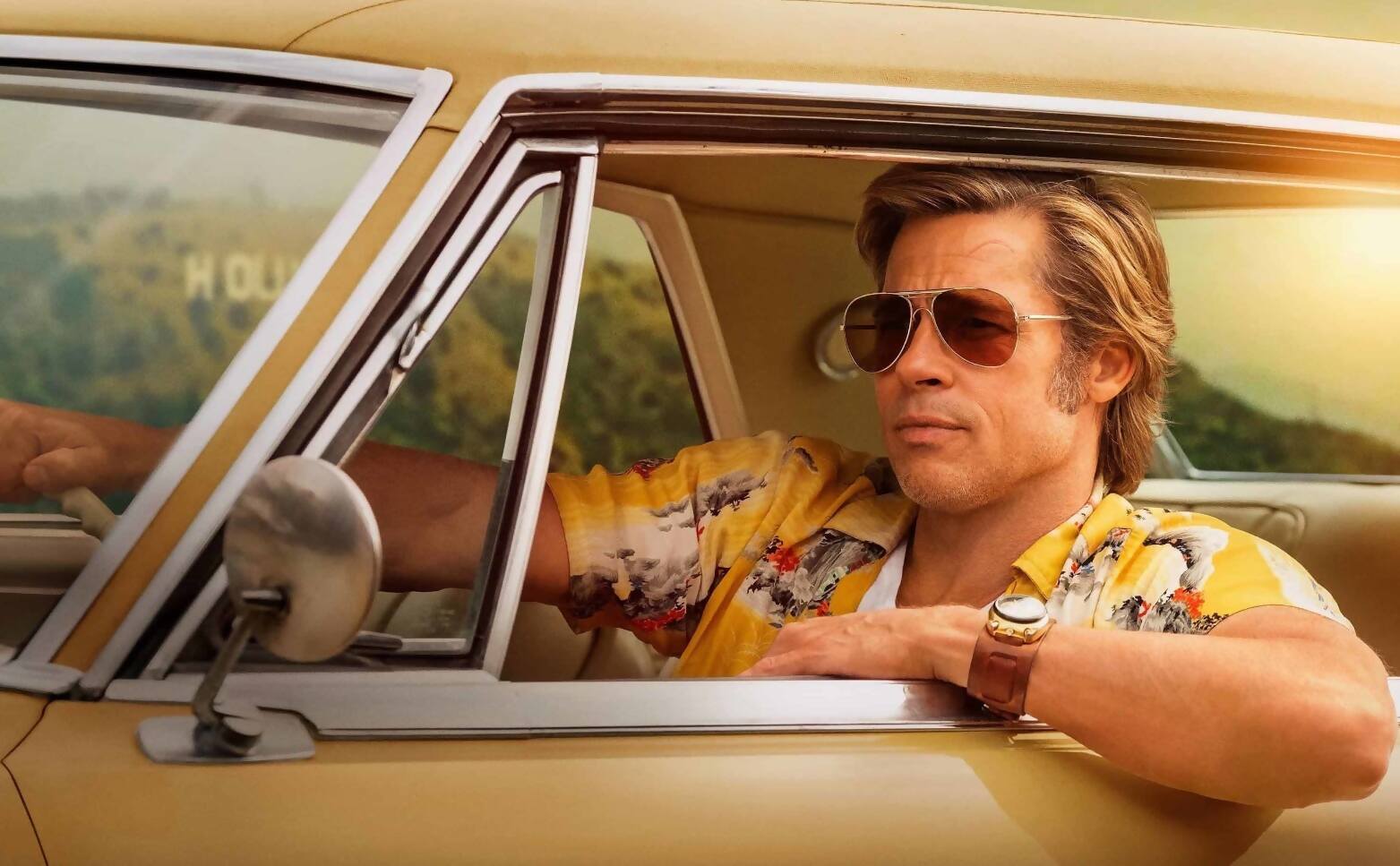
The Further Mis-Adventures of Cliff Booth takes us back to the world of Once Upon a Time in Hollywood, this time in 1977. Directed by David Fincher from a screenplay by Quentin Tarantino, it gives Brad Pitt’s stuntman a vivid second life. The setting is familiar, but the mood has shifted. Hollywood’s old glamour is still around, but the business is already changing.
Eight years on from the first film, Cliff (Pitt) has left the stunt business behind and now makes his living solving other people’s problems. He can track down almost anything, smooth over a scandal and keep an awkward secret buried. People know his name, though not always for the right reason.
Following Cliff rather than Rick Dalton is a smart choice. The first film watched an industry leave people behind; this one asks what happens to the people who manage to hang on. Where the original was steeped in nostalgia, that glow has faded a little here. Cliff is no longer just drifting through Hollywood’s excesses. He’s helping keep its less respectable corners in business.
The late seventies make a terrific backdrop. Old studio Hollywood is fading, the blockbuster era is just around the corner, television is still a force, and Los Angeles remains a tangle of celebrity, money and crime. Fincher gives the period real texture without leaning on costumes and cars alone. Rotary phones, dated appliances and familiar TV references make the world feel lived in and, at times, surprisingly far away. It’s nostalgic without being sentimental. Fincher captures both sides of the city: the sunlit glamour and the grubby business happening just out of view.
Cliff’s latest job arrives by way of Karen Crosby (Elizabeth Debicki), a former film critic turned talent agent. One of her clients, TV star Charlie Peters (Scott Caan), has landed himself in trouble with the Filipino mafia, and he wants Cliff to make the problem disappear. Charlie is a pompous show-off who treats it as a minor inconvenience, but the assignment quickly proves far messier than Cliff’s usual clean-up work.
Pitt slips back into the role effortlessly. Cliff still has charm and can talk his way out of most situations, but his body no longer lets him pretend he’s the stuntman who could shrug off anything. Pitt finds the humour in that mismatch, along with a note of weariness and vulnerability that makes the performance richer.
Tarantino’s script has the digressions and oddball exchanges you’d expect, and they rarely feel like detours for their own sake. Fincher is an intriguing match for that looseness; he has worked with Pitt before on Se7en, Fight Club and The Curious Case of Benjamin Button, and his measured style keeps the story from becoming too pleased with itself. The contrast between Fincher’s control and Tarantino’s quirks works far better than it might sound on paper.
Beneath the sharp dialogue, the film’s real subject is time: what happens to people like Cliff when the business that made them moves on. The first film looked back fondly at a golden age; this one finds a more compelling story in a less romanticised Hollywood on the edge of another change. Cliff’s world hasn’t vanished, but it’s getting harder to see where he fits in it.
The result is a confident, funny and quietly melancholy follow-up that stands tall beside its predecessor. Pitt remains the main draw, Debicki makes a strong impression, and Fincher’s restrained direction gives the film a distinct identity of its own. Hollywood has moved on, and watching Cliff try to keep up is a pleasure.